I landed in Phoenix on a Thursday in early spring, that sweet spot when the temperature hasn't yet become a punchline. The desert heat was there, sure, but manageable—the kind of dry warmth that makes you want to stay outside instead of hiding in air conditioning. I'd heard all the standard stuff: Sedona day trips, hiking Camelback, the Desert Botanical Garden. Fair recommendations, mostly. But after a few days walking around, I realized the Phoenix that actually stuck with me wasn't on the usual itineraries.
This is a city that's learned to market itself well, maybe a little too well. You can absolutely spend a week doing the famous-attraction circuit. Or you can dig a little deeper and understand why people actually choose to live here instead of just pass through.
Camelback Mountain Is Crowded for a Reason (But Not Always a Good One)
Look, I get it. Camelback Mountain is stunning. The hump-shaped peak rising out of Phoenix's grid is distinctive enough to photograph, close enough to the city to be convenient, and hard enough to feel like an accomplishment without requiring technical gear. The trail is well-maintained. The views at the top justify the effort.
But. That's precisely why every fitness influencer, tourist, and local with a GoPro shows up at dawn. On weekends, the parking lot fills up around 7 a.m. The narrow sections of trail turn into a single-file line of humanity. If you go anyway—and plenty of people do, reasonably—plan to arrive before sunrise and be mentally prepared for company.
The real issue isn't the mountain itself. It's that Camelback has become the default answer to "where do I hike near Phoenix?" when there are better scrambles and views nearby with a fraction of the crowds.

Skip Downtown's Main Strip Museums (Head to Encanto Instead)
Phoenix Art Museum and the nearby museums downtown aren't bad. Their permanent collections are solid, and they host decent touring exhibitions. But they feel obligatory in a way that doesn't match Phoenix's actual character. You'll spend half your time in climate-controlled rooms while the whole reason you came to Arizona sits outside, ignored.
What I didn't expect to find was Encanto, a neighborhood just west of downtown that's quietly become a cultural hub without the admission fees. Historic homes, local galleries in converted storefronts, a genuinely lived-in vibe. Spend an afternoon walking around Encanto's streets, ducking into independent shops, grabbing coffee at a place that's actually trying, not filling a tourism checklist. The Park of the Four Waters is there too—a public space that actually feels like it belongs to the neighborhood, not a city marketing department.
Encanto won't give you climate control or gift shop purchases, but it'll give you a real sense of how Phoenix neighborhoods actually function when they're not performing for visitors.
The Desert Botanical Garden Charges Tourist Prices for a Pretty Walk
The Desert Botanical Garden is legitimately impressive. 140 acres of curated plants, impeccable landscaping, educational signage—it's competently done. If you're into horticulture or need structured scenery, it delivers.
But the admission price ($27-30 depending on season) gets steep for what amounts to a pleasant outdoor walk. And the garden's popularity means you're often walking those pretty paths shoulder-to-shoulder with other people who paid the same price. In spring when everything blooms, it's borderline packed.
For free desert learning, head to the Desert Thresholds area in South Mountain Park or walk the Apache Trail near Goldfield Ghost Town instead. You'll see actual desert ecology instead of a manicured version of it, with way more space to breathe and no gate attendant.

Papago Park Is What Camelback Should Feel Like
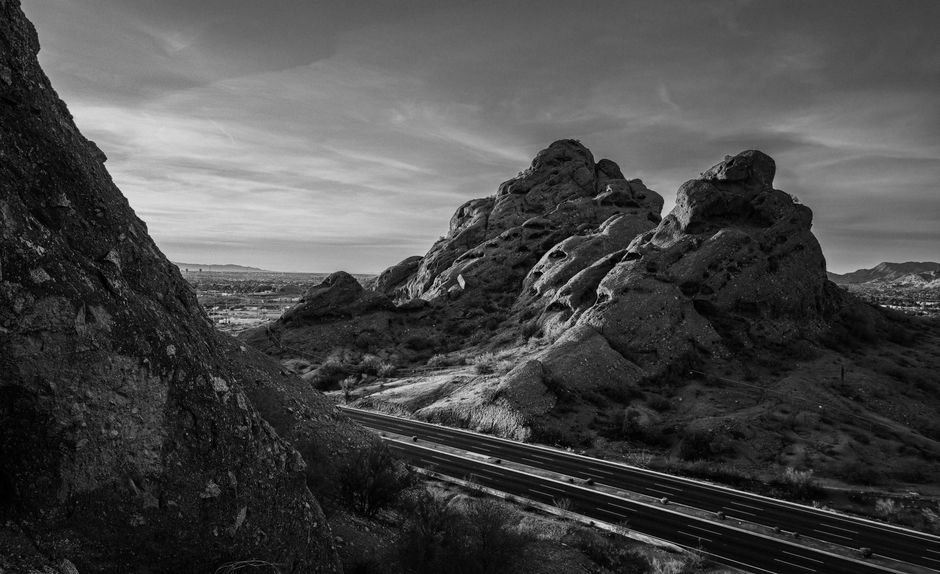
Papago Park, east of downtown, is shorter and easier than Camelback but offers views that are just as good for different reasons. The red sandstone formations here are more dramatic up close, the hiking options are more varied, and—this matters—it doesn't feel like you're standing in line to summiting a tourist attraction.
The Papago Park Trail itself is moderate, around 3 miles, and loops through better-preserved desert landscape than most of the city's more famous hikes. The red rocks frame views of downtown Phoenix in a way that reminds you the city actually exists in a specific place, not just on Instagram. Start early, but you won't need to arrive in darkness to secure parking.
There's also less pressure here. People hike Papago because they want to, not because it's the one hiking trail they've heard of.
Taliesin West Beats Tempe's Tourist Corridor by Miles
Frank Lloyd Wright's winter home and school is up in the foothills north of downtown, and while it's not unknown, it's somehow less crowded than you'd expect for something genuinely unique. The architecture is stunning—Wright designed buildings that feel like they grew out of the desert rather than being imposed on it.
Tour groups are smaller here than at big museums, and you actually get close to the work instead of viewing it from behind velvet ropes. The grounds themselves are worth the visit even if you're not architecture-obsessed. In late afternoon, the light on the pale yellow walls is worth the drive alone.
Compare this to the standard Tempe Town Lake or Arizona State University campus tours that most visitors expect, and Taliesin West feels like a place where you're learning something specific instead of just checking boxes.
Heard Museum Is Worth the Hype (Actually)
Unlike some attractions on the overrated list, the Heard Museum genuinely deserves its reputation. The collection of Native American art and artifacts here is substantial, well-presented, and contextual in a way that matters. This isn't a curated-for-tourists version of indigenous history; it's actually respectful.
Yes, there's an admission cost and yes, it gets visitors. But the experience is dense enough that it doesn't feel crowded even when people are there. You can spend hours or drop in for an hour, depending on your attention span. The gift shop stocks actual work from indigenous artists, not just mass-produced souvenirs.
If you're visiting Phoenix and have interest in the region's actual history before it became a sprawling metro area, this is the one major museum that justifies its cultural prominence.
Roosevelt Row Arts District for Street Culture Without the Performance
Roosevelt Row, just south of downtown, is where Phoenix's actual artist community lives and works. Galleries, studios, vintage shops, dive bars—the kind of district that exists because artists need cheap rent and creative space, not because a city council decided to develop it.
It's still developing, and gentrification is creeping in, so it has that energized feeling of a neighborhood in transition. Street murals are here not because they're part of an official public art initiative but because artists painted them. Local galleries show work by people who actually live in Phoenix, not traveling exhibitions. The coffee shops and restaurants exist primarily for neighborhood residents, not tourists performing the role of adventurous travelers.
Walking through Roosevelt Row on a weekend afternoon or catching a gallery opening, you get a better sense of how Phoenix actually functions as a creative city than you would at any official cultural venue.
Wrigley Mansion Feels Like Phoenix's Secret
Most visitors never make it to Wrigley Mansion, the historic chewing gum magnate's home tucked into the hillside northeast of downtown. It's worth seeking out. The restoration is meticulous, the house tells a specific story about Phoenix's early wealthy residents, and the views across the city from the grounds are genuinely great.
Tours are small and informal. You're never fighting crowds. The period details—from the original furnishings to the exterior stonework—feel authentic because the place has actually been preserved, not recreated for effect. It's a genuine historical home, not a tourism experience.