I rolled into Richmond on a humid Saturday expecting the usual Virginia capital experience—colonial history, Civil War sites, maybe some decent barbecue. What I found instead was a city that felt pulled in two directions: toward a version of itself that exists mostly in guidebooks, and toward something messier, more interesting, and frankly more fun if you know where to look.
After three weeks poking around neighborhoods, eating where I shouldn't have known to look, and skipping a few places everyone told me were "essential," I came away with some opinions. Not right answers—just what actually felt worth my time against what felt like checking a box. Richmond's got enough real stuff going on that you don't need to waste energy on the overhyped parts.
The Crowding Problem at Canal Walk
Canal Walk is the first place most visitors end up, and I get why. It's a three-and-a-half-mile pedestrian path along the former industrial canal, there are restaurants and breweries lining it, and it looks Instagram-friendly on a clear evening. But here's the thing: everyone knows about it. On any nice weekend, you're shuffling shoulder-to-shoulder with two hundred other people, waiting twenty minutes for a table at one of the same four chains, and the whole vibe becomes "busy tourist thoroughfare" rather than "place to actually be."
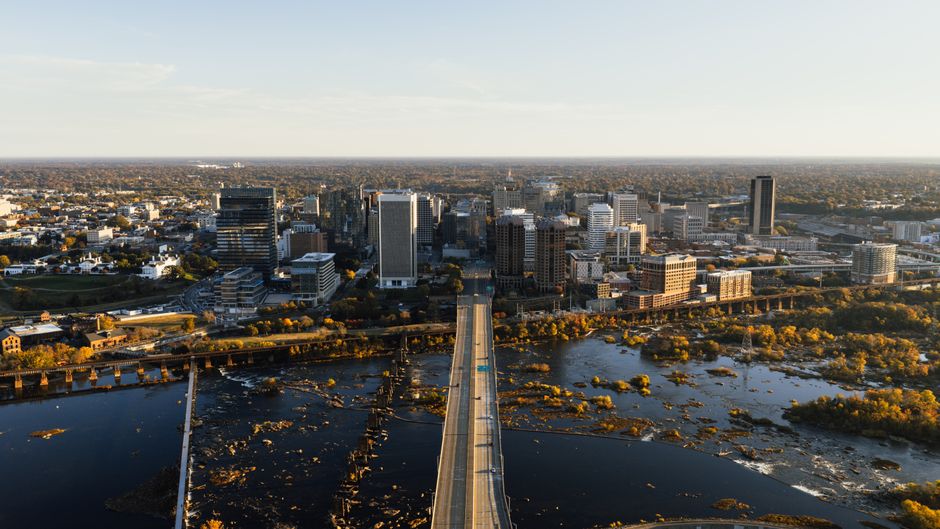
The canal itself is fine. The path is nice. But if you want to walk along water in Richmond without fighting crowds, head to Belle Isle instead—it's a genuine island park in the middle of the James River, free, quieter, and you get actual nature rather than a managed pedestrian district. Or walk the north bank of the river itself, which most tourists miss entirely. The real charm of Richmond's waterfront doesn't depend on restaurants and branded signage.
Monument Avenue Isn't Actually the Must-See
Monument Avenue used to be the thing in Richmond—a tree-lined boulevard with massive statues of Lee, Stuart, and other Civil War figures. The conversation around these monuments has evolved significantly over the last few years, and some have been removed or relocated. But there's still traffic, there's still an assumption that if you're in Richmond, you have to drive or walk this avenue and photograph the remaining monuments.
Unless you're specifically interested in Civil War monuments or Richmond's complicated relationship with its own history, you're mostly standing in a wide street looking at old statues. It reads as obligatory rather than rewarding. If you actually want to engage with Richmond's history—the full version, not the highlights reel—the Black History Museum & Cultural Center of Virginia, tucked in Jackson Ward, will tell you more in two hours than Monument Avenue will in two weeks. It's where I went to understand the city rather than just check a box.
When 'Historic Richmond' Becomes a Performance
The Valentine, the city's history museum, is professionally run and has real artifacts. I'm not saying it's bad. But it reads a lot like a traditional American history museum: curated, earnest, and somewhat separated from the living city. You look at costumes and maps and feel like you're in a classroom. The admission isn't cheap, and unless you're genuinely into museum work or have a specific research goal, the value proposition felt thin.
Instead, I spent more time just walking through Jackson Ward and Church Hill, the neighborhoods that built Richmond's culture and still carry it. I stumbled into the Reynolds Gallery in Jackson Ward, picked up a used book from a street vendor on Broad Street, got lunch at a spot that didn't have a website or a marketing budget. That's where the actual history happens—not behind glass, but baked into how the city still functions.
Carytown's Real but Retail-Heavy
Carytown is a short stretch of Cary Street with boutiques, a bookstore, restaurants, and a generally walkable, pleasant vibe. People recommend it constantly as "Richmond's best neighborhood." It's safe, it's photogenic, and the storefronts are well-maintained. All true. But it's also extremely polished—the kind of place that feels like a shopping district that happens to have residents nearby, rather than a neighborhood that happens to have shops.
If you want that same energy but with more actual neighborhood character and fewer people shopping for home décor, Northside in nearby areas like the Museum District or the neighborhoods along Grove Avenue offer way more interesting mix: real dive bars, secondhand bookstores, cafés that aren't trying, houses where you can actually see how people live. Carytown's fine for a Saturday afternoon if you need to buy something. But it's not where Richmond feels like itself.
What Actually Rewards Your Time: Scott's Addition
Scott's Addition is a former industrial neighborhood just west of downtown that's become a working artist and maker community—not a gentrified recreation of one. There are actual studios, actual galleries, actual craft production happening in converted warehouses. On First Fridays, galleries open up and the streets fill with people, but not tourists—people who live here and know what they're looking at.
Brewing companies and restaurants have moved in, but they feel like they're part of the neighborhood rather than the point of it. I got lunch at Sub Rosa, which is as close to a perfect bakery as I've found anywhere, and spent an hour looking at work at Gallery5 and other independent spaces. It felt like I was seeing actual Richmond—people making things, selling things, building something that wasn't a brand. No line, no cover charge, no sense of performing tourism.
The James River Itself, Ignored
Visitors come to see Virginia—mountains, rivers, natural beauty. Richmond sits on the James, which carves a legitimate gorge through the city, but most tourists drive over it without really looking. I rented a kayak for an afternoon and paddled a few miles, and it shifted everything. The river is working—people fish, people swim, people actually use it. There are riverside parks that don't feel manicured, sections where the city just sits beside wild water.
Belle Isle, the island park in the middle of the river, has trails through genuine forest, a Civil War era trench system, and almost no admission or crowds. If you're in Richmond and you like being outside, the James River area is where that actually happens. Most guidebooks mention Maymont Park, which is fine, but it's a managed garden experience. The river itself is what you came here for—the actual geography, not the landscaping.
Three Notch'd Brewing Is Real, but Look Wider
Three Notch'd is a solid craft brewery in Manchester with good beer and a neighborhood draw. It's deservedly popular. But Richmond has dozens of breweries, and if you're chasing the "craft brewery experience" as a tourist, you might miss the actual neighborhoods where these places sit. Manchester, where Three Notch'd is located, has transformed over the last decade—art studios, galleries, restaurants, a genuinely mixed neighborhood. The brewery is part of it, not the reason for it.
I'd say go to Three Notch'd if you like beer, but also walk down Idlewood Avenue and Main Street, go to Residual Pellet in the same neighborhood, grab food at a restaurant that doesn't have a marketing budget. The Manchester scene is genuinely interesting—mixed income, mixed race, genuinely mixed—in a way that feels like you're seeing a real neighborhood rather than a development project.
Jackson Ward: The Heart That Guides Everything
Jackson Ward is where Richmond's African American culture and history has been built and sustained for 150 years. It's where the Black History Museum & Cultural Center of Virginia sits, where Maggie Walker's house tells the story of an entrepreneur who built wealth and community in a segregated city, where churches built and rebuilt after fire and loss still function as gathering places.
I spent a full day just walking here—not as a tourist doing "Black history," but as someone trying to understand how Richmond actually worked. That context changes how you read the rest of the city. The real Richmond isn't in the carefully staged attractions; it's in the neighborhoods where people actually built something in spite of everything working against them. Jackson Ward, more than any paid museum, makes that clear.
Frequently Asked Questions
Is Monument Avenue worth visiting in Richmond?
Monument Avenue is historically significant and tree-lined, but unless you're specifically interested in Civil War history or statues, it reads more as obligatory than rewarding. Most visitors spend 30 minutes photographing monuments from their car. For deeper Richmond history, Jackson Ward and the Black History Museum & Cultural Center of Virginia offer more substantive context and feel less like a checkbox.
What is the best neighborhood to stay in Richmond VA?
It depends on your style. Carytown is polished and shopping-focused; Jackson Ward and Church Hill offer more neighborhood character and actual residential life. Scott's Addition works if you want maker studios and galleries mixed with food and brewing. For walkability and restaurants without the tourist focus, neighborhoods like Broad Street or the Museum District area offer more authentic Richmond than Canal Walk.
What should I do in Richmond if I like local art and makers?
Scott's Addition is the main neighborhood for working artists and maker studios, with galleries and craft production in converted warehouses. First Fridays draw local crowds. The area also has good bakeries like Sub Rosa and restaurants that feel part of the neighborhood. It's less polished than Carytown but feels like actual Richmond rather than a retail district.
Which one would you visit?