I showed up in Santa Fe on a Tuesday in October thinking I'd spend three days poking around art galleries and eating blue corn enchiladas. I left two weeks later, and I still wasn't done. The thing about Santa Fe is that the tourist infrastructure — the museums, the branded experiences, the Instagram-ready corners — sits right on top of a genuinely weird, layered, working creative city that most people never actually find.
I'm not here to trash the famous stuff. The Georgia O'Keeffe Museum is real, the art is exceptional, and I understand why people book months ahead. But there's a difference between "worth your time" and "worth standing in a crowded gift shop for 45 minutes." After spending enough time here to develop opinions I probably don't deserve, I've got takes on both sides of that divide. Some things live up to their reputation; plenty don't.
The Plaza: Overrated, But Make It a Day Trip to the Railyard Instead
The Plaza is the gravitational center of Santa Fe tourism. You walk around the historic square, buy turquoise jewelry from vendors, maybe eat lunch at one of the restaurants facing the gazebo, and tick it off. Fair enough. But here's what grinds me: you'll pay $18 for a mediocre taco in a building that hasn't changed its menu since 2003, and the whole thing moves at the pace of spring break in Cancun. The galleries around the Plaza are reputable, but they're also the ones every guidebook mentions, which means they're full.
The Railyard District — about a 10-minute walk south — is where I actually spent my money and time. It's got the same art-world energy but feels like a real neighborhood. Independent galleries, local artists selling work directly, coffee shops where people are actually working on laptops instead of performing leisure. Segundo Street is the main drag. I'd eat at Iconik (New Mexican food that actually tastes fresh) or Blue Heron (excellent coffee roaster) and then wander the gallery blocks. No lines, no gift-shop fever, just art for people who seem to actually care about it.

Canyon Road's Gallery Corridor: Tourist Traffic, Modest Returns
Canyon Road is supposed to be the art-world spine of Santa Fe. It's a steep, scenic drive lined with galleries, and when I first heard about it, I imagined quiet studio spaces tucked into the landscape. What I found was a beautiful road you can't actually park on, galleries designed to sell high-end work to people from Dallas, and enough foot traffic that you feel like you're browsing rather than discovering.
Don't skip it entirely — there's real art there, and the physical setting is lovely. But go on a weekday morning, not a weekend. And honestly? If you want to see what living Santa Fe artists are actually making, the First Friday Gallery Walk (every first Friday of the month, 5 to 8 p.m., across various galleries and studios in different neighborhoods) gives you a way better sense of the scene. People are opening their studios, pouring wine, actually talking about their work. It costs nothing and feels like you're inside something real.
Museum Fatigue: When Big Institutions Don't Deliver What You Expect
The Georgia O'Keeffe Museum is undeniably a world-class collection housed in a beautiful building. The problem is that her work — these enormous, abstract, intimate paintings — needs you to be alone with it. Instead you're moving through with 40 other people, pressed against the glass, reading plaques while someone's backpack touches your ribs. I respect what the museum does. I just don't think you get what you came for in those conditions.
If you're determined to see O'Keeffe's work, go to Ghost Ranch, where she actually lived and painted, about an hour north. The setting changes everything. You're in the landscape she was painting. Or skip both and go to the Museum of Spanish Colonial Art, a fraction of the size, a quarter of the crowds, and genuinely illuminating if you're interested in how Spanish Catholic imagery evolved in New Mexico. The Spanish Colonial museum is the kind of place where you'll have conversations with the staff instead of shuffling past captions.
The 10 Thousand Waves Resort Experience: Expensive Wellness Theater
Ten Thousand Waves is a Japanese-style spa on the foothills above Santa Fe, and it's exactly as beautiful and expensive as you think. I went. The grounds are serene. The hot tubs have views of the valley. A 60-minute massage runs you about $150, and every amenity is designed to feel restorative. Here's my honest review: if you have $300 to spend on a treatment and want to feel like you did something healthy, it's fine. But it's also a luxury resort experience that could be anywhere with slightly better scenery.
If what you actually want is hot water and a sense of peace, go to Sunrise Springs, about 20 minutes outside Santa Fe toward Las Vegas (the New Mexico one, not Nevada). It's more modest — public tubs, less fussy, way cheaper — and the natural hot springs feel less like wellness marketing and more like a thing that just exists and people use it. The vibe is way less Resort Tourism and more local families on weekends, artists looking for a break, people who just want to soak.
Meow Wolf's Sprawling Installation: Clever, But Maybe Not a Full-Day Commitment
Meow Wolf is an immersive art installation — basically an enormous interactive playground disguised as contemporary art. You walk through a fake house, find portals, explore digital environments, take a lot of photos. It's visually dense and undeniably clever, and I understand why it's on every Santa Fe itinerary. The company is locally founded, the space is genuinely innovative, and if you like that kind of hands-on, Instagrammable art, it's well-executed.
But here's my quibble: after about two hours, you've basically seen everything, and the value proposition breaks down. A ticket is around $30, and you could spend that on three galleries where you'll see work that challenges you differently — work by actual human artists who are thinking about what they want to say, not what Instagram algorithm will reward. Meow Wolf is worth a visit, maybe 90 minutes max. Don't build your whole trip around it.

The Real Moves: Christo Rey Church and the Backroads
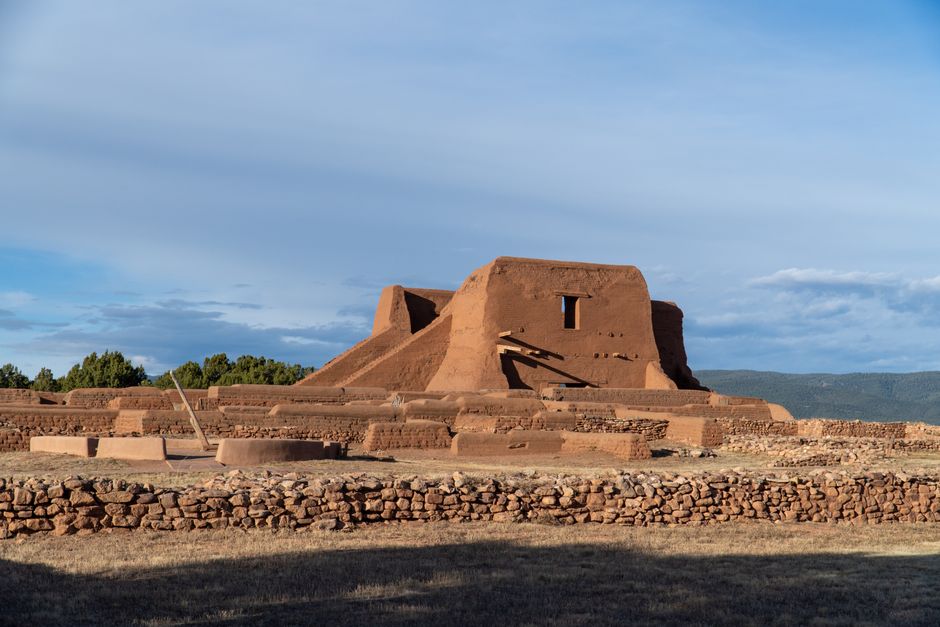
If you want to understand Santa Fe beyond the tourism layer, go to Christo Rey Church, a massive stone structure built entirely by hand in the 1930s. There's no gift shop, no crowd, no entry fee — you just walk in. The scale of human effort is visible in every stone. It's a working parish church, not a museum. That distinction matters.
From there, wander the neighborhoods north of the Plaza — the San Miguel chapel area, Acequia Madre Road. These are the parts of the city where people actually live, where the architecture isn't curated for appearance, where you'll stumble on small galleries and cafes that exist because someone wanted to make something, not because a tourism board green-lit it. I spent a full afternoon walking these roads, popped into a studio where a woman was teaching an encaustic class, bought a painting, and had a real conversation. That's the Santa Fe that justifies the hype — you just have to be willing to look slightly off the main road.
Where to Eat When You're Tired of the Hype
Everyone tells you to eat at Café Pasqual's or Gelateria Della Nonna on the Plaza. They're fine. Lines out the door, expensive, fine. Instead: go to Clafoutis (small French-New Mexican hybrid spot, actual effort, reasonable prices) or The Shed, which has been serving red and green chile since the 1950s in a tucked-away location that doesn't advertise. The Shed is where locals actually go, and the food tastes like it was made by someone who learned this cuisine, not someone researching it.
For coffee, Raven Café is overrun. Iconik in the Railyard (mentioned earlier) or Ohori's Coffee, a serious roastery in a converted warehouse space. Lunch at Harry's Roadhouse if you want New Mexican home cooking that's authentic in the way that matters — which is to say, it's exactly what people in Santa Fe make and eat at home.
Frequently Asked Questions
Is the Georgia O'Keeffe Museum worth visiting Santa Fe for
The museum has a world-class collection and beautiful building, but you'll spend most of your time navigating crowds. If O'Keeffe is your main goal, consider visiting Ghost Ranch (where she lived) instead, about an hour north. The landscape context makes her work hit differently. If you go to the museum, arrive right at opening time on a weekday.
Where do locals actually eat in Santa Fe
Skip the crowded Plaza restaurants. Try The Shed (red and green chile since the 1950s), Clafoutis (French-New Mexican blend), or Iconik in the Railyard for New Mexican food that tastes like actual cooking rather than tourist interpretation. Ohori's Coffee and Raven Café are the best local coffee spots, though Raven gets busy.
Is Canyon Road worth visiting
Yes, but go on a weekday morning when it's not mobbed. The scenery is genuinely beautiful and there's serious art, but weekend afternoons feel like a parking-lot parade. For better access to working artists and lower traffic, try the Railyard District or attend the First Friday Gallery Walk instead.
Which one would you visit?