I've done the usual Portland loop enough times—Powell's, the waterfront, coffee shops—that I started getting restless on my third day in the city. The thing nobody tells you about Portland is that it's almost better as a base camp. You're sitting right in the middle of so much that matters: the Columbia River Gorge to the east, the Willamette Valley wine country to the south, the Coast Range mountains everywhere you look. An hour or two in the car and you're somewhere completely different. I spent a week doing day trips outward and barely scratched what's within reasonable driving distance.
Multnomah Falls and the Columbia River Gorge (30 minutes to 1.5 hours)
This one gets the tourist treatment, sure, but it deserves it. Multnomah Falls itself—the 620-foot ribbon dropping straight down—is legitimately stunning no matter how many people are standing in front of you with their phones out. The hike to the top is maybe two miles round trip, paved and moderately steep, and takes you up to the bridge for a different angle on the whole scene. I went on a weekday morning in October and still had company, but the crowds thin out once you get past the lodge.
If you're driving from Portland, you can make a whole day of the gorge without much effort. Stop at Wahkeena Falls on the way (another waterfall, more solitude, better hiking), grab lunch somewhere between the falls—there are surprisingly decent options—and maybe loop back via Rooster Crow or one of the scenic pullouts. The Vista House at Crown Point is the obvious stop if you want a quick panorama and don't mind the gift shop. Spring is busy but the water runs high; fall is less crowded and the light is better. Winter and early spring can be wet and foggy, which honestly adds to the mood if you're not expecting postcard conditions.
Silverton and Silver Falls State Park (45 minutes to 1.5 hours)
Silver Falls is the real reveal if you want actual hiking without the I-84 parking-lot vibe. The trail system loops past ten waterfalls, and you can do a three-mile walk that hits several of the best ones, or commit to the full seven-mile circuit if the weather's decent. The water flows year-round but peaks in spring when the snowmelt is coming down hard.
The small town of Silverton itself is worth an hour. It's got the bones of an old logging and mining community without feeling artificially quaint—there's an actual hardware store, actual residents going about their day, and a decent brewery or two if you need a break. The drive south from Portland takes you through the Willamette Valley, so the scenery is rolling farmland and forest, nothing dramatic but restful. Fall is probably the best season here; winter rains make the trails muddy but the falls are powerful. Summer is fine if you don't mind crowds and heat.
Cannon Beach and the North Oregon Coast (1.5 hours)
You can get to the actual ocean in an hour and a half, which still surprises people who've never left Portland during their visit. Cannon Beach is the closest real beach town, and it's a straightforward drive through forest out to the coast. The town itself has a main drag with restaurants and galleries, most of which are fine without being anything you couldn't find elsewhere. But the beach is the draw—Haystack Rock is the obvious centerpiece, this huge sea stack that sits just offshore and dominates the view.
Walk the beach at low tide and you can actually get out to Haystack Rock; check tide tables before you go because you can get stranded if you're not paying attention. The sand is firm and dark and the water is cold enough that you won't be swimming, but the light and the sea air and the solitude (especially if you go on an off-season weekday) makes it worth the drive. Ecola State Park just north of town has better hiking trails if you want something more strenuous than a beach walk. Summer brings crowds and sunshine; winter is moody and often rainy, and the crowds disappear. Spring is probably the sweet spot—weather's improving, the light's good, and you won't fight for parking.
Yamhill County Wine Country (45 minutes to 1 hour)
The Willamette Valley's wine region spreads out south of Portland, and you don't need to drive far to get into it. Yamhill County—the area around McMinnville and Carlton—is the closest serious wine-tasting zone. It's less polished and less crowded than Napa, which is either a strength or a weakness depending on what you want. The tasting rooms tend to be low-key, often in converted barns or houses, and the people pouring wine actually work at the winery instead of following a script.
The drive is straightforward south from Portland, and you can hit three or four wineries in a day without feeling rushed. Pinot noir is the signature grape, and most places do it well without the prestige-pricing you'd get in California. The landscape is gentle rolling hills with vineyards between tree lines, nothing dramatic but pleasant to drive through. Pick up lunch supplies in McMinnville or Carlton and do a picnic between tastings. Late August through October is harvest season and the best time to visit—the weather's warm and clear, and there's actual energy in the tasting rooms. Winter can be gray and rainy; spring is lovely if you hit it right, but it's also prime tourist season.
Mount Hood: Timberline or Government Camp (1.5 to 2 hours)
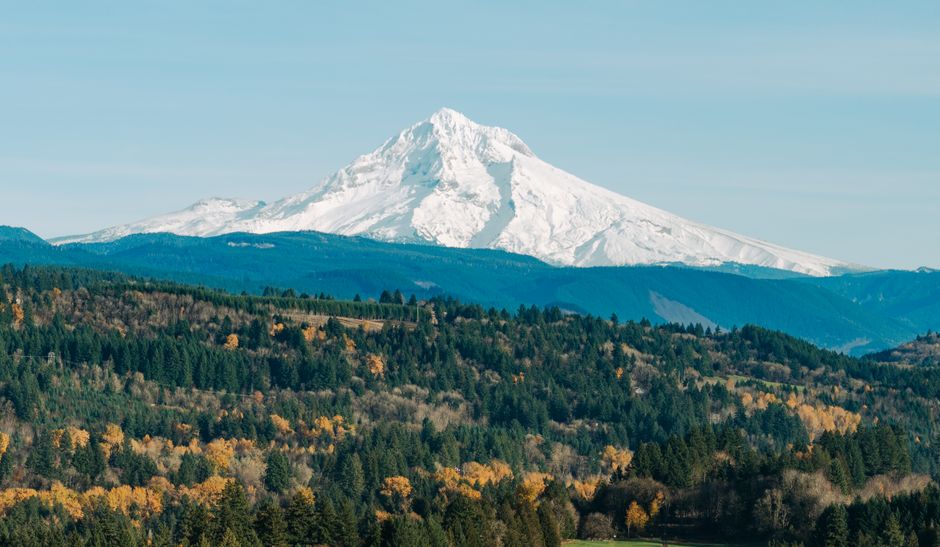
If you want altitude and actual mountains without a massive drive, the Mount Hood loop from Portland is doable as a long day trip. Timberline Lodge sits at around 6,000 feet on the mountain's south side and is accessible by a scenic drive through the national forest. The lodge itself is worth stopping at for lunch or a walk around the grounds, and there are hiking trails that range from easy loop walks to more serious alpine treks depending on the season and your knees.
Government Camp, the little resort town just below Timberline, has restaurants and a general-store vibe that's more working-class than polished. If you're going in summer, you can drive up and get real hiking with views that matter. In winter, the area gets hammered with snow and it's ski country, but driving around the loop—the scenic roads that circle the mountain—is spectacular even if you're not skiing. Fall is probably the best season for a day trip: the weather's stable, the light's clean, and you won't fight summer tourist crowds. Spring can be iffy with snow still lingering at elevation. The drive from Portland goes through farmland and then gradually into forest, and it's genuinely scenic without being exhausting.
Salem and the Witch Hazel Byway (1 hour to 1.5 hours)
Salem's not exactly a destination, but the drive south through the Willamette Valley is pleasant and there are actual things to do once you're there. The state capitol building is free to walk around and has the kind of civic-era architecture that's interesting if you care about that stuff. There's also a decent art museum and some decent gardens if you're looking for a quieter kind of day.
The real reason to drive this direction is the countryside around Salem. The Witch Hazel Byway is a loop that takes you through small towns and agricultural land, past orchards and hazel thickets and river views. It's low-key sightseeing—you're mostly just driving around and stopping occasionally for the view or a lunch spot. There's a farmers market in Salem on Saturdays that's legitimately good if you're visiting then. This drive works year-round but is probably best in late summer or early fall when the agricultural landscape is most visibly active and the weather's cooperative.
Getting Practical About Day Trips
A few things I learned by doing a bunch of these: leave early if you're driving more than an hour, because you'll want actual daylight at your destination and not just the drive there. Weekday mornings are dramatically less crowded than weekends, especially at obvious stops like Multnomah Falls. Download offline maps if you're not sure about cell service—the gorge especially can be spotty. Bring a sweater even in summer; it's cooler at elevation and near the coast.
You also don't need to be a hardcore hiker to enjoy any of these places. All of them have options for easy walking and sitting and looking around, which is honestly the whole point of a day trip. Portland's great, but sometimes you need to remember why people moved there in the first place—it's the access to everywhere else that matters.